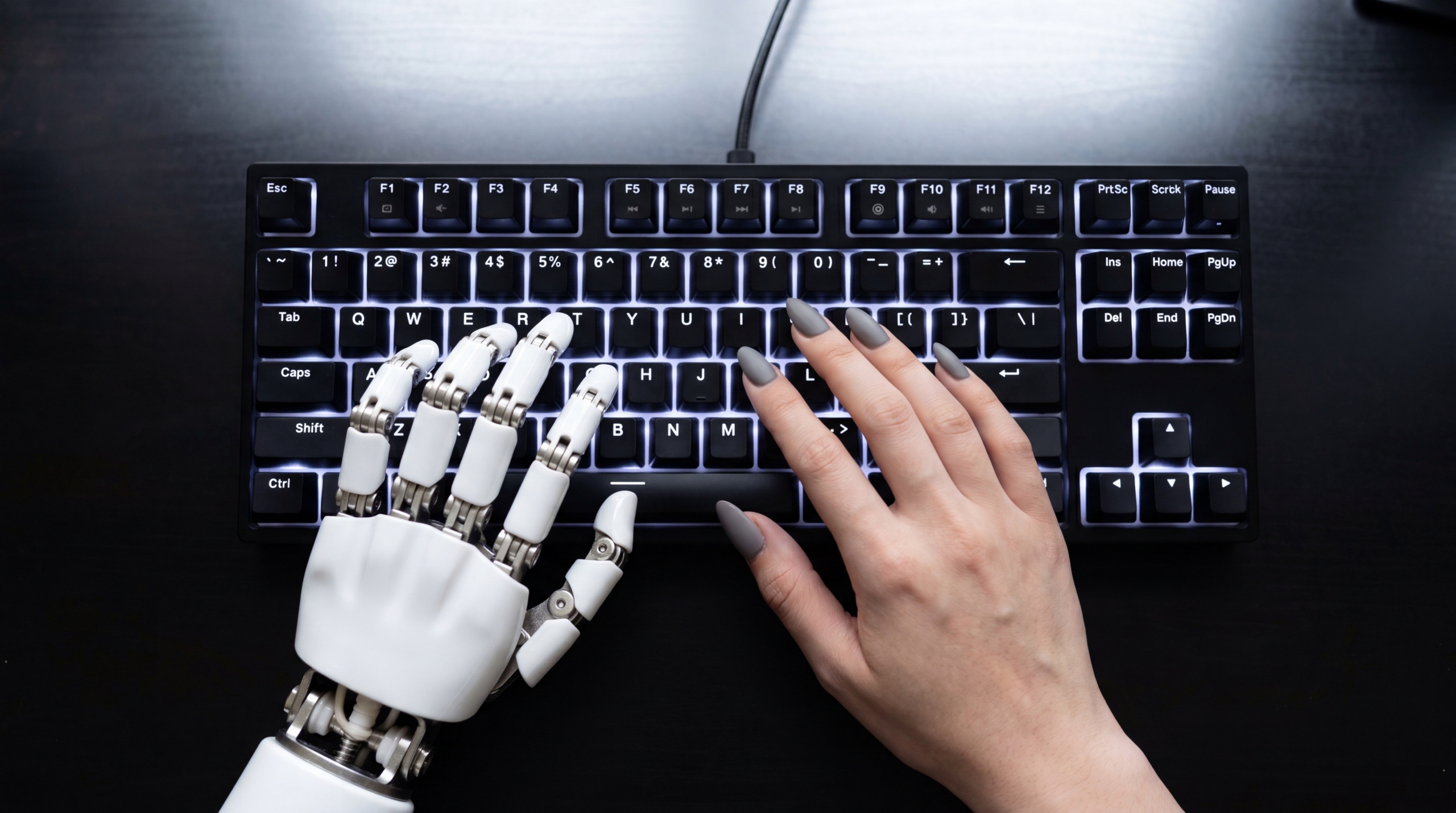
The people who carry the most accountability for AI-assisted research rarely run the searches themselves. They are the executives, the board members, and the partners who make the decision. When an AI research tool gets a fact wrong, the cost falls on them.
AI-assisted research has become genuinely useful, and that is what makes the risk easy to miss. A short paragraph of instructions now frames the questions, runs the searches, and writes the report, and the output reads as authoritative because it is well-written. The parts that are wrong arrive in the same confident voice as the parts that are right, and nothing on the page marks the difference.
Why a failure that looks like success is the real risk
The danger is that failure does not look like failure. When one of these AI tools invents a fact, it sounds exactly like the truth. It uses the same confident tone, clean phrasing, and tidy citations. A fabricated number sits on the page wearing the same clothes as an accurate one.
This happens because of how the tools are built. Large language models generate text by predicting what is likely to come next rather than retrieving facts from a source, resulting in outputs that do not necessarily reflect the truth. An unchecked claim then makes its way up, first as a line in a leadership report, then as a figure the strategy rests on. By the time the decision is made, the fabricated fact blends in, indistinguishable from the rest.
How often does this actually happen?
Hallucination rates vary by model and by task. The pattern that should concern any decision-maker is what happens as documents get longer. Recent benchmarking finds that fabrication rises sharply with context length. In short, the longer the report, the more likely it carries at least one invented fact.
Even more important than the hallucination rate is how the hallucinated claims are poorly differentiable from the non-fabricated facts. At 90% accuracy, you have no way of knowing which tenth is wrong without checking it yourself, because the invented facts carry no flag and no red line. Any claim in a long report has a chance of being fabricated, and on the surface, it looks identical to the ones that are correct.
Who has already paid for this?
Organisations with far more review capacity than most are paying the price. In 2025 Deloitte agreed to partially refund the Australian government for a report that fed into public policy. A researcher found references to non-existent academic papers and to a quoted court judgment that had never been handed down. The same pattern surfaced again in a healthcare report Deloitte prepared for a Canadian province, costing close to 1.6 million Canadian dollars. A news outlet reviewing it found multiple references to academic papers that did not exist, along with real researchers credited for studies they had never written.
The courts show the same pattern at scale. A public database of legal filings that relied on AI-hallucinated citations had passed several hundred documented cases by early 2026. It continues to grow, and these are only the cases that were caught. The damage in every case was traced to the same place: a clean, well-structured report, trusted because it looked finished, that nobody had checked line by line.
What accountability actually requires
The honest answer is uncomfortable: checking a long AI report properly takes real time. You have to trace each source, confirm it exists, and confirm it supports the claim attached to it. Done thoroughly, that effort can erase the time the tool was supposed to save.
So the practical question for leadership is whether a report arrives with its evidence already attached. That means being able to see how far each claim can be trusted, having disagreements between sources surfaced rather than quietly resolved, and keeping a record of what has changed since the last time anyone looked.
Take a report generated with AI and count the claims you cannot trace to a real, current source. For the ones that do cite a source, open it and check whether it supports the point being made. Most people reach claim ten and understand the problem without anyone having to explain it.
The shift worth making
The fix is a change in what you ask for. Stop requesting research and start requesting the receipt that comes with it: ask your AI assistant to show the sources, flag what is outdated, and point out where sources disagree. The habit costs nothing, it works on the very next prompt, and it comes down to refusing a confident answer that arrives without its evidence.
This is the problem we have been working on at Aicadium, and it led us to build a verification layer that sits on top of the AI tools teams already use. If you want to see what that looks like in practice, we have set it out in full here from the framework to a live run you can watch end to end, so you can judge it for yourself. The more durable takeaway is smaller than any tool: research you can trust comes down to one habit, which is insisting on the receipt.