Who should care about world models, and why
Most chief executives can safely ignore the week’s AI research. This is one of the exceptions, and it is worth ten minutes of your attention.
A world model is a system that learns how a physical environment behaves, and predicts what happens next, depending on the actions taken. That sounds like a problem for the engineering team. But the decisions about when and where to trust one, and how much to spend doing so, is a business decision. It lands on the chief executive’s desk, because it is really a question about capital, risk, and timing.
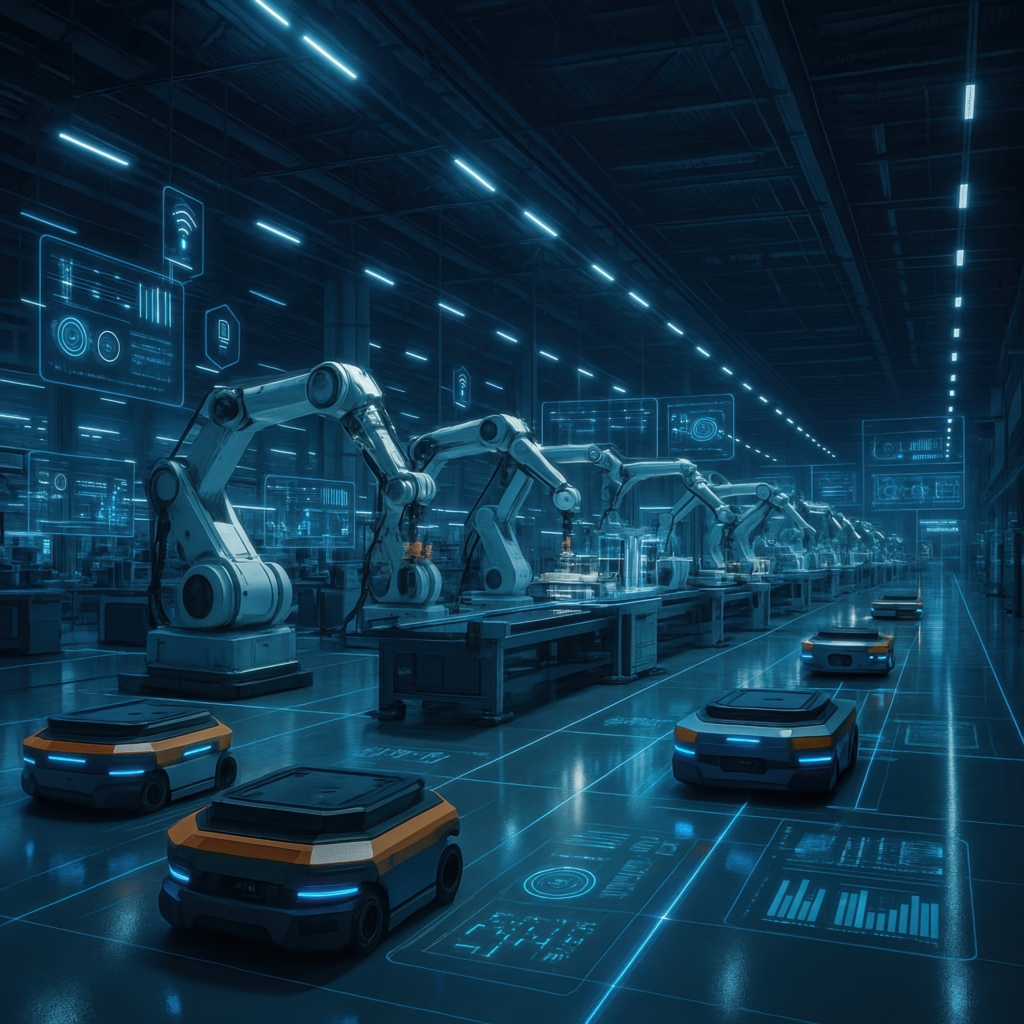
Here is the test for whether this applies to you. Does your business depend on machines acting in the physical world? Robots, autonomous vehicles, warehouse and logistics systems, agricultural or mining equipment, quality inspection, anything that moves, grips, sorts, or drives? If the answer is yes, world models and their close cousin, the physics engines, will shape what those systems can do, and how reliably. They will also shape what those systems cost to deploy. If the answer is no, you can file this away. The honest version of this article does not pretend everyone needs it.
Or at least, that is one way to look at it. At Aicadium, we think that anyone doing anything in the real world should be thinking about this. Today, human brain work is augmented by AI, tomorrow, human physical work will be. Physical AI is now where GenAI was some years ago, and there will be a similar inflexion point to the 2023 ChatGPT launch. So from that perspective, leaders in most industrial sectors should keep this topic in view.
Why a CEO, and not just the CTO
The instinct is to delegate this entirely. Resist that instinct, for three reasons.
First, the money is already moving. A new lab co-founded by AI pioneer Yann LeCun raised over US$1 billion, the largest seed round on record for a European startup. World Labs, founded by Fei-Fei Li, raised US$1 billion in a single round, according to Crunchbase reporting. The underlying models are being adopted at scale, not merely trialled. Your competitors and your suppliers are placing bets now. The cost of understanding the field is far lower than the cost of being surprised by it.
Second, this is where expensive mistakes are made. The most costly error in physical AI is mistaking a convincing demonstration for a working product. A system can perform flawlessly in simulation and still fail the first time it acts in the real world. Reality differs from the model in small ways that compound. That gap is the difference between a budgeted automation project and a write-off. Catching it requires asking the right question before the money is committed, and that question is a leadership habit, not a technical one.
Third, the winning move is judgement, not spend. The advantage does not go to whoever buys the largest model. It goes to whoever matches the right method to the actual problem and plans realistically around the cost of running it. That is strategy, and strategy is the chief executive’s job.
What you actually need to know
You do not need the mathematics. You need enough fluency to challenge a claim and scope a pilot honestly. Four points carry most of the value.
There are two ways to predict the physical world, and they are not interchangeable. A world model learns from experience and is strong where visual variety and realistic practice data matter. A physics engine computes from physical laws and is more accurate where precise force and contact decide the outcome. A vendor who offers one as a cure-all for both is a vendor to question.
An impressive demo is not proof of readiness. The sharper question is how a system performs on unfamiliar, contact-heavy tasks it was not trained for, not on the tidy scenario in the demonstration. Make that your standard question and most of the risk surfaces before you sign.
The best models are open in principle but expensive in practice. Running a model to make a prediction is cheap. Adapting the strongest models to your needs can require server-class computing. Budget for adapting accessible pre-trained models rather than training frontier ones from scratch, which is rarely the right call for most businesses.
The label “world model” is being stretched. Several products marketed as world models are something else on close inspection. A genuine one lets you propose an action and predicts the resulting state of an environment you can interact with. Holding to that simple test separates real capability from confident branding.
Where this is heading
Today’s physical AI resembles the large language models of around 2022: clearly capable, still inconsistent. Much of the progress since then came from the engineering built around the models rather than the models alone. A similar trajectory here would make robots and autonomous systems viable in many settings that are out of reach today. The leaders who benefit will be the ones who built the judgment early, while the field was still being figured out.
Should every company care about world models?
It’s a sliding scale. World models matter most to organisations whose operations depend on machines acting in the physical world, such as manufacturing, logistics, autonomous vehicles, agriculture, and robotics. A purely digital business can treat this mostly as background for now. The discipline is to be honest about which group you are in, rather than to follow the headline.
What is the one question a leader should ask a vendor?
Ask how the system performs on unseen environments, with attention to extensive evaluation of contact-heavy tasks rather than on the very specific scenario it was trained for. A confident demonstration says little about real-world readiness. Performance on unfamiliar conditions is the closest proxy a non-specialist has for whether something will work once it is deployed and paid for.
Aicadium has tested these systems first-hand. Our view is straightforward. Some chief executives treat world models as a strategic question rather than a technical curiosity. They will deploy physical AI with fewer costly surprises and more durable results. The rest of this series goes a level deeper, in plain language, for the leaders who want it.