Forty minutes into the quarterly review, everything is going beautifully. Slide fourteen declares the company “AI-ready”. Three pilots live, one tool rolled out, a roadmap that colours in all of next year. Then a board member looks up from her notes. “Which of these has produced a measured outcome?”
The slide does not change. The room does.
If you have sat in that room, you know the silence. We call it the AI readiness optimism gap, the distance between how ready an organisation believes it is and what the evidence supports. This post covers why the gap exists, what it costs, and the method that closes it.
Key points
-
Organisations consistently rate their AI readiness higher than the evidence supports. We call this the AI readiness optimism gap, and it is the most common pattern in readiness assessments.
-
The gap is expensive. In 2025, 42% of companies abandoned most of their AI initiatives, up from 17% in 2024, and the average organisation scrapped 46% of AI proofs-of-concept before production, per S&P Global Market Intelligence.
-
Three dynamics drive the gap. Plans get counted as progress, estimated value gets treated as realised value, and pilots create the feeling of maturity without the foundations.
-
Evidence-based assessment closes the gap. Readiness answers must cite implemented initiatives with measurable outcomes. Real examples, not future plans.
-
For executives and investors, the playbook is simple. Treat self-assessed readiness as a hypothesis, demand implemented examples, and reward honesty about gaps. Honest readiness data is what makes capital allocation work.
The cost of believing your own estimate
That boardroom silence scales. In 2025, 42% of companies abandoned most of their AI initiatives, up from 17% the year before, according to S&P Global Market Intelligence’s survey of more than 1,000 enterprises across North America and Europe. The average organisation scrapped 46% of its AI proofs of concept before they ever reached production.
These were not casual experiments. They were funded initiatives with executive sponsorship. Capital was deployed against readiness claims that did not survive contact with reality.
The pattern has public faces too. In early 2024, fintech Klarna announced that its AI assistant was doing the work of roughly 700 customer service agents, a company-reported figure that made it the reference case for AI-driven efficiency. By May 2025, its CEO publicly acknowledged the push had “gone too far”. Chasing cost had lowered service quality, and the company began rehiring humans for complex support. Klarna did not abandon AI. It corrected the estimate it had believed most.
For an investor looking across a portfolio, this is the core anxiety. Every company reports momentum. Pilots are launched, tools are adopted, roadmaps are ambitious. But self-reported readiness is a poor input for capital allocation, and the gap between narrative and evidence is precisely where investments go wrong.
Why the gap exists
It would be easy to read all of this as executives spinning their boards. Mostly, they are not. The optimism gap is not dishonesty. It comes from three predictable dynamics.
Plans get counted as progress. “We are working on a data governance framework” feels like readiness. It is not. Until the framework is implemented and producing measurable outcomes, it is an intention. Organisations routinely grade themselves on trajectory rather than position.
Estimated value gets treated as realised value. In one organisation we assessed, leadership had done much of the hard work. There were quantified value targets for every pilot, weekly senior-leadership portfolio reviews, and named accountability for each project. On paper, a value-driven operation. Yet not a single pilot had transitioned from a value estimate to a confirmed, documented outcome. The optimism said “we are disciplined about value.” The evidence said “value is still a forecast.” Both were sincere. Only one was true.
Pilots create the feeling of maturity. A handful of proofs-of-concept can make an organisation feel advanced while the foundations of data quality, governance, operating model, and talent remain untested at scale. This is how companies end up in pilot purgatory, a state of perpetual experimentation that never compounds into value.
Notice what these three dynamics share. None of them requires anyone to lie. The gap grows out of sincere people measuring themselves with the wrong ruler. Which is why the fix is not more honesty. It is a better ruler.
Evidence over enthusiasm
That better ruler exists. It works by changing what counts as an answer.
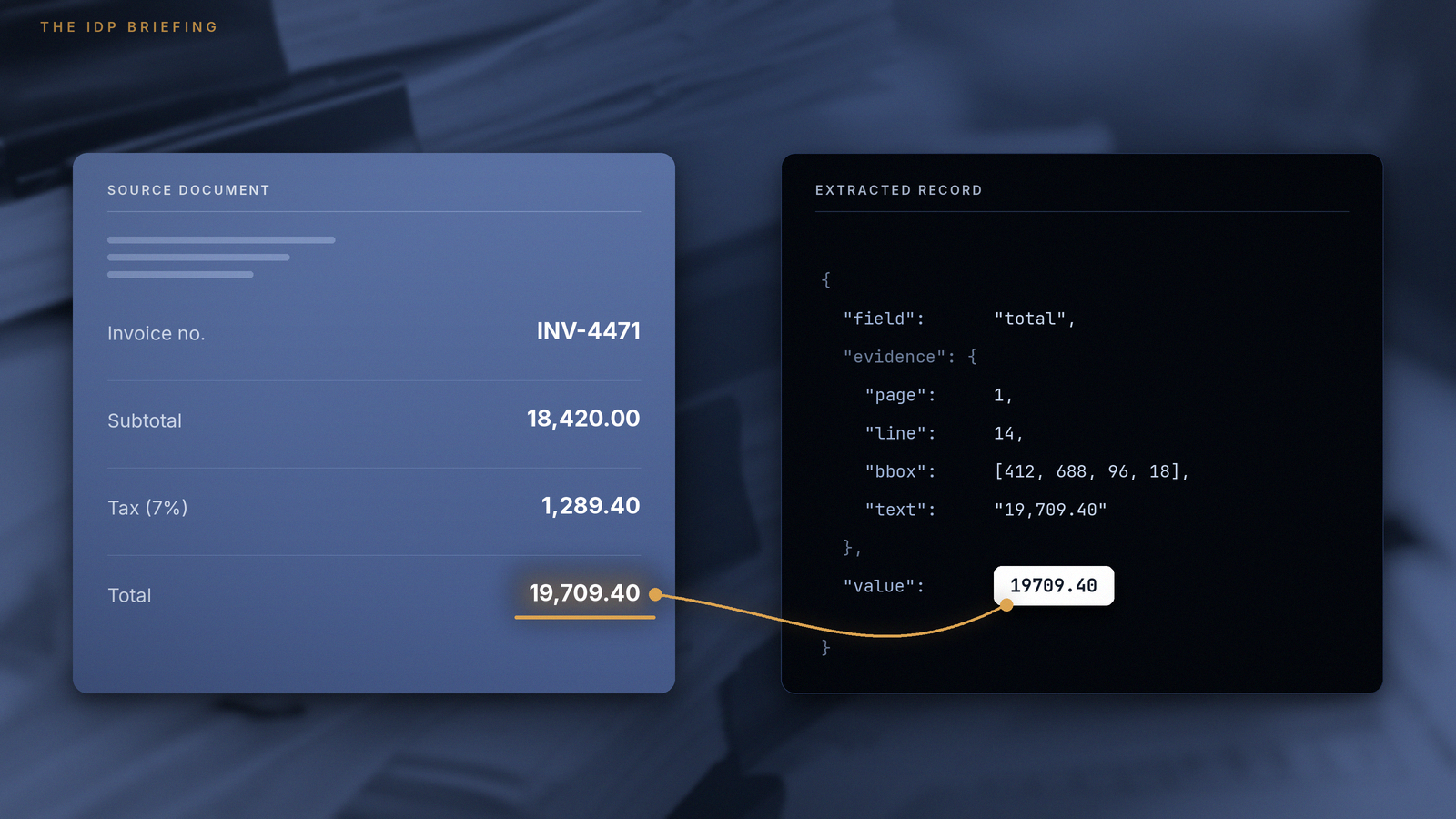
In our assessment methodology, one rule does most of the work. Responses must be based on real examples, not future plans. Interviewees come prepared with specific initiatives, metrics, and outcomes. “We are planning to” and “we are working on” do not score. Only implemented initiatives with measurable results demonstrate readiness.
We ask leadership teams to think like auditors of their own organisation. Come with proof, not promises. If you cannot measure it, you cannot claim it is working.
This sounds severe. In practice, it is liberating. When the standard is evidence, the assessment stops being a debate about narratives and becomes a shared map of facts. Leaders stop defending an image and start locating themselves honestly across the pillars that matter: strategy, value creation, operating model, technology, data, governance, and talent and culture.
Gaps are the value
A standard this strict raises an obvious fear. What if we measure badly? So here is what we tell every organisation before an assessment begins. The teams that admit their gaps get the most from the exercise, because an honest “we are early” produces a usable plan. An inflated “we are advanced” produces only a comfortable meeting.
The goal is not to be advanced. It is to know where you are, so the next dollar and the next quarter go to the right place.
What this means for executives and investors
If the dollars you steer belong not to one company but to a portfolio, three implications follow:
Treat self-assessment as a hypothesis, not a data point. Most organisations hold a more optimistic view of their AI readiness than reality suggests. Assume the gap exists until evidence closes it.
Demand implemented examples in every readiness conversation. The question is not “what is your AI strategy?” It is “show me an initiative that is live, the outcome it produced, and how you measured it.”
Reward honesty about gaps. If management teams learn that acknowledged weaknesses trigger support rather than punishment, you get truthful readiness data, and truthful data is what makes portfolio-level capital allocation work.
Three implications, one shift. The readiness conversation moves from trusting narratives to weighing evidence. To a management team, that can sound adversarial. It is anything but.
The gap is a map, not a verdict
None of this is about catching organisations out. A readiness gap, honestly measured, is the most actionable artefact a leadership team can own. It shows exactly where effort and investment should be sequenced, and it gives boards and investors a shared, evidence-based language for a conversation that is too often driven by enthusiasm.
The organisations that will scale AI successfully are not the ones that score themselves highest today. They are the ones that know their real score, and treat it as a starting point.
This is the first post in a series on evidence-based AI readiness. The next post covers why a readiness score should be received as a starting point, not a judgment, and why readiness is measured as a trend rather than an event. Continue to the next post: A score is a starting point: why readiness is measured as a trend, not an event.